



From Fear to Freedom: How Adult Day Care Helps Break the Cycle of Fear After a Fall
The Quiet Earthquake of a Fall
A fall isn’t just a stumble; it’s an emotional earthquake. For seniors, it shakes their trust in their own bodies. For caregivers, it signals that life may never feel as steady as it once did.
Most advice on preventing falls focuses on the mechanics—such as installing grab bars, wearing sturdy shoes, and removing clutter. Important, yes. But what often goes unaddressed is the invisible damage: rebuilding self-trust and healing the emotional aftermath of a fall. Without tending to those wounds, prevention only goes halfway. For many Austin caregivers, adult day care becomes the missing middle—support that rebuilds confidence after a fall without jumping straight to assisted living or full-time care.
The Domino Effect of Fear of Falling
Fear of falling isn’t harmless—it causes more falls. Seniors who tense their bodies, shorten their steps, or avoid activity become weaker and less balanced, making the risk higher.
Research in the U.S. shows that fear of falling predicts future limitations in mobility and self-care as much as the number of falls themselves. According to the CDC, one in four older adults falls each year, and after one fall, the chance of another doubles. A hip fracture can mean a long recovery, loss of independence, and in many cases, death within a year.
Fear magnifies this danger, setting off a cycle: fear → inactivity → weakness → isolation → more falls.
The Emotional Fallout for Seniors and Caregivers
Every fall carries an invisible aftershock. It’s not just about broken bones—it’s about broken confidence, shaken roles, and the quiet ways fear rewrites daily life.
 When Every Step Feels Smaller
Mrs. Johnson, 82, trips on a throw rug. She isn’t seriously hurt, but afterward, everything changes. Her arms hover slightly away from her body, ready to catch herself. Her steps grow shorter, more tentative. She avoids her book club and hesitates to step into church. Fear is shrinking her world—and slowly moving her into a downward spiral. Less movement means weaker muscles, slower reflexes, and a greater pull toward depression. What looks like caution is, in fact, a path toward vulnerability.
 The Weight I Can’t Lift
Mr. and Mrs. Lee have always shared everything—until the day she slipped in the bathroom. She couldn’t get up, and he discovered he didn’t have the strength to lift her. He had to call a neighbor for help, and the embarrassment of that moment hasn’t left him. He worries about the cost of paramedics if it happens again.
Now, he hovers constantly. His fear comes out sideways—in overprotection, frustration, even sharp words: “Don’t do that, you’ll fall again.” What begins as love and worry turns into control, criticism, and the slow erosion of a marriage’s give-and-take.
 Fixing What I Can See
When Maria’s father falls, he brushes it off with a laugh. “I’m fine,” he insists, even as he clings to the counter for support. Maria doesn’t know how to address his pride or the sadness beneath his jokes, so she does what feels concrete: orders grab bars, schedules physical therapy, and rearranges furniture. She can fix the house, but she can’t fix the fact that he no longer feels steady.
He begins hiding the truth—keeping quiet about near-misses, downplaying stumbles—because he doesn’t want more arguments or restrictions. Sometimes, parents capitulate, barely leaving the house again. Fear of falling lingers, and both father and daughter become more entrenched in their roles—he as the proud parent who won’t admit weakness, she as the dutiful daughter who fixes what she can see but can’t reach what he feels. It’s a kind of emotional distance that no checklist can bridge.
For caregivers of those with dementia, this spiral may be even sharper—the memory of the fall can fade, but the fear remains in the body, reshaping movement and confidence in ways that no home modification can fully address.
How Adult Day Care Breaks the Cycle
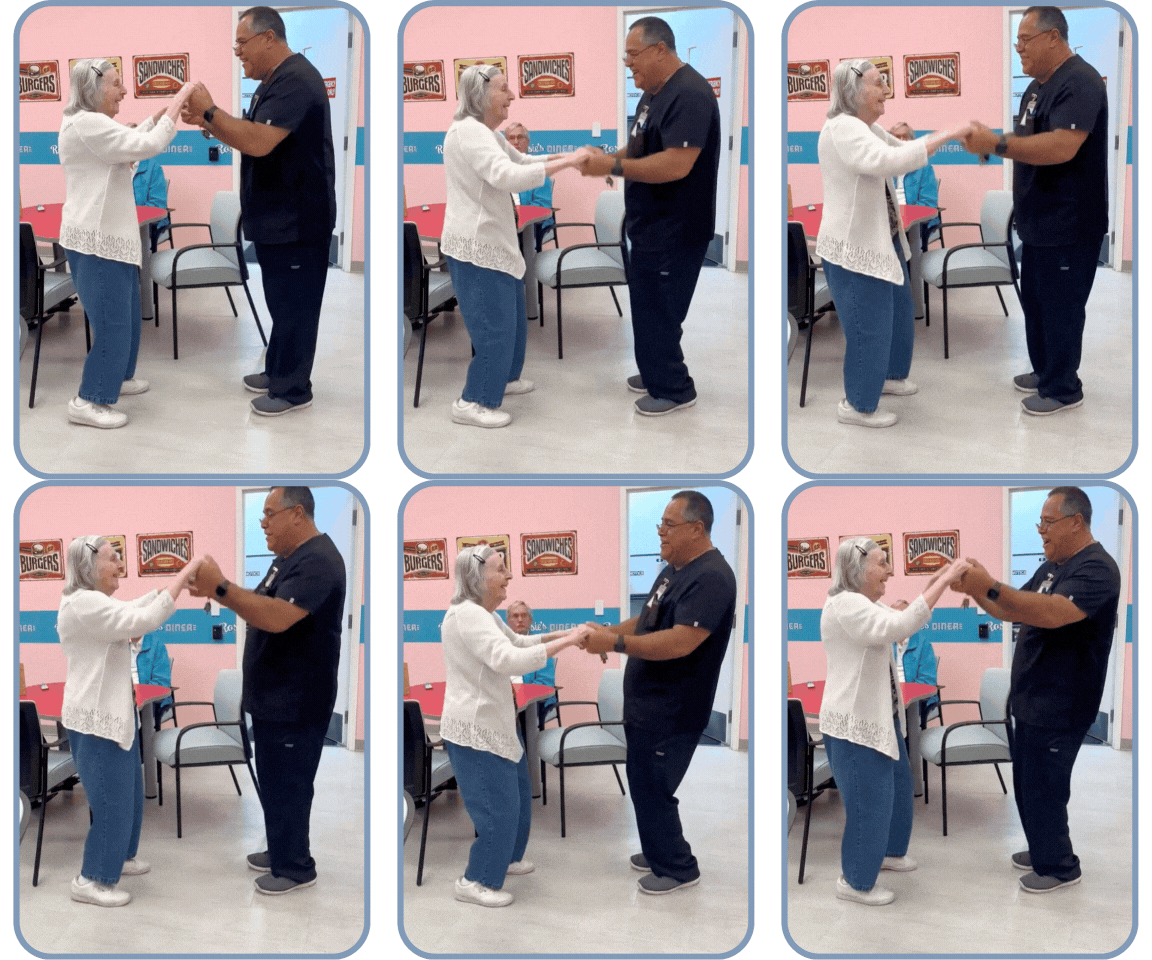
Fear doesn’t have to define the rest of life. Adult day care interrupts the cycle in powerful ways:
Supervision eases worry, letting seniors move without hypervigilance.
Gentle, structured exercise builds strength and trust in their body again.
Social connection replaces isolation and normalizes the experience of falling—peers show that life goes on.
Joyful activities shift focus from fear to laughter and accomplishment.
Respite for caregivers lightens their own load of worry and restores balance at home.
Together, these elements turn fear into freedom.
The weeks after a fall are when confidence is most fragile—and also most recoverable.
Caregiver Tip: Spotting Fear of Falling
If your loved one shuffles their feet, clings to furniture, or avoids outings, these may be signs of Fear of Falling, a real and serious syndrome—not just “nerves.”
At Town Square NW Austin, we help seniors rebuild confidence and rediscover joy in movement and connection. Caregivers gain peace of mind knowing their loved one is safe, supported, and thriving.