



When Everything Is Too Much: Understanding Overstimulation in Dementia
It can feel like it came out of nowhere.
Your loved one seemed fine a few minutes ago. Maybe you were enjoying a family visit. Perhaps you were getting ready to leave the house, sitting in a waiting room, or spending time together after a busy day.
Then, seemingly without warning, something changes.
They get quiet, restless, irritated, tearful, or suddenly ready to go home.
You may find yourself thinking, “What happened? We were doing fine.”
With dementia, overstimulation may build up before anyone notices. The brain sends out warning signs, and caregivers usually need time and practice to spot them.
Once you know what to look for, those moments can start to make more sense.
Overstimulation Is Not Always Loud
When we hear “overstimulation,” we usually think of obvious things: loud rooms, bright lights, crowds, music, television, or several people talking at once.
Those things can absolutely be too much for someone living with dementia.
Overstimulation might sometimes present itself in more subtle ways.
It can be a closet full of clothes when your loved one is getting dressed. A restaurant menu with too many options. A family member asks several questions in a row. A room where the television is on, dishes are clattering, and two conversations are happening at once.
It may be a task that previously felt simple but now has too many steps, or a visit that remains happy and meaningful, yet still tiring.
Sometimes, “too much” does not look chaotic on the outside. Inside, though, the brain is working hard to sort, filter, understand, respond, and keep up.
This is why overstimulation, or sensory overload, can surprise families. What seems normal to others might feel confusing, tiring, or uncomfortable for someone whose brain is already working hard.
When Words Are Harder, the Body Speaks First
One of the hardest parts of dementia care is that your loved one may not be able to clearly explain what is wrong.
They may not be able to say, “The room is too loud,” “I’m tired,” “Too many people are talking,” “I don’t understand what you’re asking,” “This feels uncomfortable,” or “I need a break.”
So the message may come through in other ways.
They may turn away from the conversation or stop answering. They might repeat the same question, ask to go home, rub their face or head, push away from the table, pace, cry, snap, shut down, or suddenly seem exhausted.
These are not always random mood changes. They may be signs of sensory overload. The brain and body may be asking for less input, more time, or a quieter place to reset.
This is why dementia caregiving often calls for a new way of listening. You are not just listening for words, but also learning to notice what your loved one’s nervous system is telling you.
Agitation Is Communication. Look for the Root.
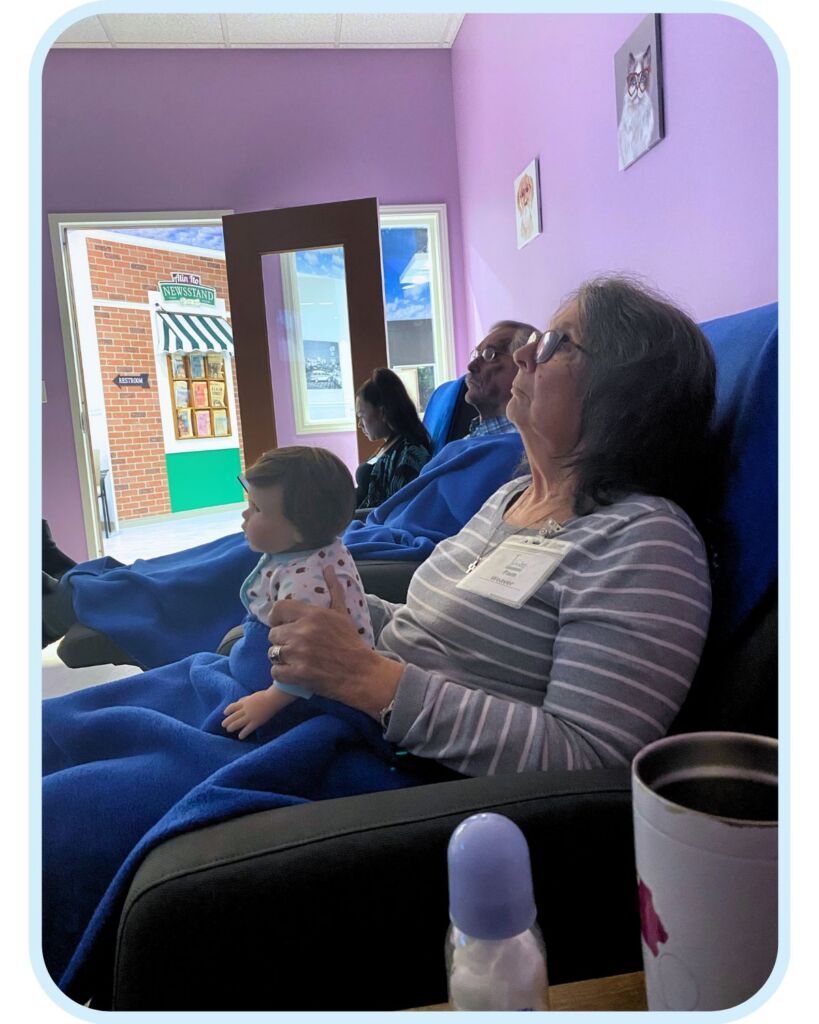
Agitation is the behavior caregivers can see: pacing, repeated questions, irritability, tears, restlessness, refusal, or a sudden need to leave.
But in dementia care, agitation is rarely just “a mood.” It is a form of communication.
Your loved one may be overwhelmed, uncomfortable, tired, confused, rushed, or trying to get away from something that feels like too much. They may not have the words to explain what is wrong, so their body and behavior do the talking.
The goal is not just to calm things down, but also to figure out where the overwhelm started. Often, it is a few small things adding up.
Imagine a cup slowly filling up. Every sound, question, choice, change, or expectation adds a bit more. Things might seem fine for a while, but then one more thing happens and the cup overflows.
To the caregiver, it can feel sudden. To the person living with dementia, the overwhelm may have been building.
The more you learn what fills the cup, the easier it becomes to make small changes before things become too much.
Was it sensory overload? A noisy room, bright lights, clutter, several conversations at once, a crowded waiting area, or the television running in the background?
Was it cognitive overload? Too many choices, too many steps, too many questions, or a task that required more decision-making than your loved one could manage in that moment?
Was it something physical or emotional that tipped the scales? Hunger, thirst, fatigue, discomfort, pain, poor sleep, anxiety, an unfamiliar place, a change in routine, or too many transitions in one day?
Notice. Reduce. Reset.
When your loved one seems overwhelmed, it helps to have something simple to come back to.
Notice. Reduce. Reset.
Notice what changed. Review what led to agitation or an emotional shift: a louder room, a lengthy visit, several people talking, too many choices, repeated questions, too many steps, or quick transitions with little time to settle.
Then, reduce the load.
Less input. A slower pace. A quieter environment.
That might mean turning off the television during dinner, offering two choices instead of five, letting a visit end sooner, or giving your loved one time to respond before repeating the question. It could also mean lowering your voice, simplifying the next step, dimming a harsh light, moving away from a busy room, or sitting together quietly for a few minutes. When you are out in public, you might try stepping outside for fresh air, finding a quieter corner, or taking a short break away from crowds and noise. These small strategies can help de-escalate overstimulation even when you are not at home.
Finally, help them reset gently. Offer water or a snack, put on familiar music, or take a short walk. Sit nearby without asking questions. Let the activity end before it becomes too much.
These small changes matter because they give the brain less to handle.
When someone is already tired, confused, or overwhelmed, asking less of them can be a very caring way to help.
Why Predictable, Sensory-Aware Environments Matter
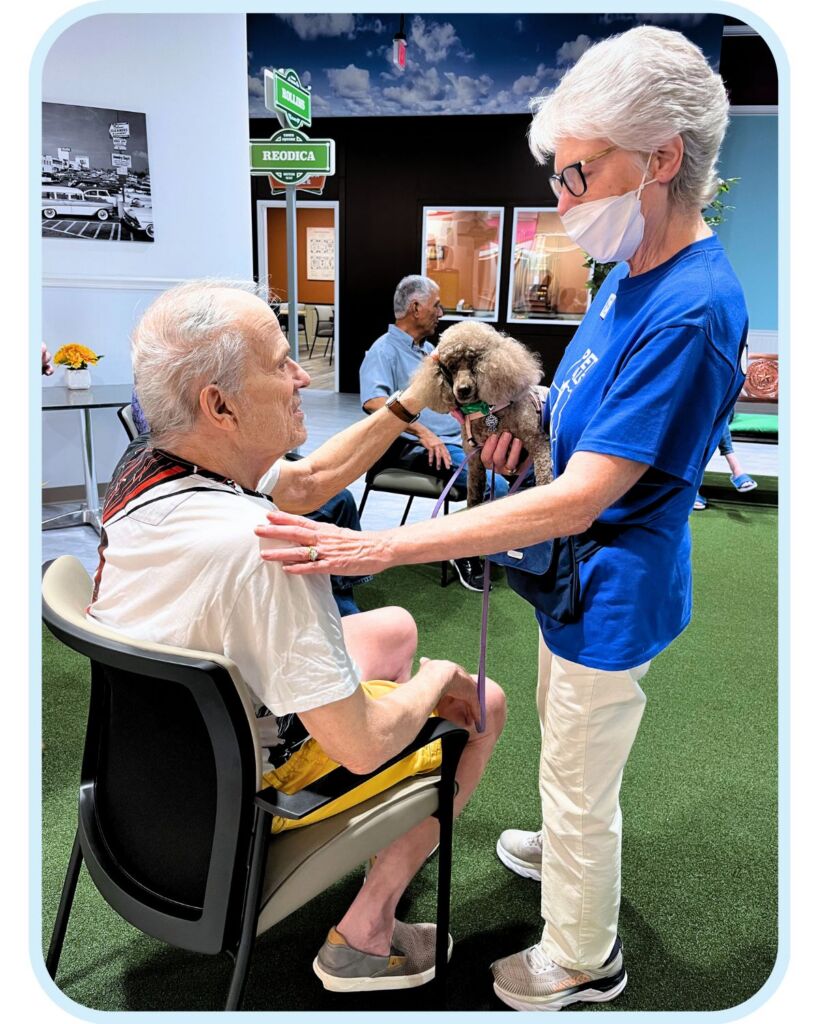 People living with dementia still need joy, connection, movement, creativity, conversation, and purpose.
You do not have to remove all stimulation or make life small.
The goal is to offer the right kind of stimulation, at a comfortable pace, with enough time to pause.
That is one reason structure matters.
Predictable routines reduce what the brain must process. Familiar activities feel grounding. Calm transitions help. A quieter space lets someone rejoin the day instead of becoming overwhelmed by it.
At Town Square NW Austin, our 1950s-inspired town is designed to offer meaningful engagement in a familiar, welcoming environment. Some spaces are lively and social. Others, like the pet shop, are quieter and cozier, offering lower stimulation. This gives members a place to enjoy connection without as much noise or activity around them.
That balance matters.
A good day is not measured by how much activity is packed in.
A good day is shaped by rhythm, familiarity, connection, and knowing when the brain may be asking for less.
Overstimulation Is Information, Not a Caregiving Failure
Missing the signs does not mean you failed. Caregiver guilt is a common and deeply human feeling. It is normal to wish you could do more or to worry when something is missed, but remember to treat yourself with the same kindness you would offer a friend. Self-compassion is just as important as any other part of care.
Most families learn dementia care one confusing moment at a time. Happy visits can still be exhausting. Repeated questions may signal stress. Sudden mood shifts can mean the day was too much.
Overstimulation and sensory overload are signals. They are clues about what your loved one’s brain and body might be trying to tell you.
When caregivers notice these clues, they can respond with more compassion, more confidence, and less self-blame.
Caregiver Tip: Track the Clues for a Week or Two
When a tough moment happens, it is normal to focus on the behavior. But the most helpful clues are often found in what happened before and what helped after.
For the next week or two, try keeping a simple note on your phone or a printed chart on the fridge. Use these five prompts:
- Date and time
- What happened before?
- What did I notice?
- What helped?
- What made it harder?
You may begin to see patterns that were easy to miss in the moment. Maybe visits need to be shorter. Maybe errands are harder after lunch. Maybe dinner goes better without the television on. Maybe your loved one needs fewer choices, more time, or a quiet place to pause.
You are not tracking behavior to label it as good or bad.
You are learning how your loved one communicates now.
